
Top UK doctors have issued a serious warning about how tech devices and unlimited screen time are harming children’s health. The Academy of Medical Royal Colleges, representing 23 medical colleges across the country, says frontline doctors are treating “horrific cases” linked to excessive device use and online content exposure.
What Doctors Are Seeing
NHS doctors across different specialties report concerning patterns in children and young people that appear connected to tech and device use. The medical community is calling this a “public health emergency”.
Key health impacts include:
- Physical health problems from too much screen time
- Mental health issues linked to harmful online content
- Poor speech development in children under 5
- Children becoming isolated in a “digital bubble”
The medical colleges are now gathering evidence over the next three months to document these issues and create guidance for healthcare professionals.
What’s Happening Next
The UK government plans to launch a consultation this week on restricting social media for under-16s. Options being considered range from a full ban (like Australia introduced in December) to time limits and stronger controls on algorithms.
However, 43 child protection charities, including the NSPCC and Molly Rose Foundation, warn that a complete ban isn’t the answer. They argue it could push children to “darker, unregulated corners of the internet” and take away important support networks for vulnerable young people.
Practical Guidance for Parents
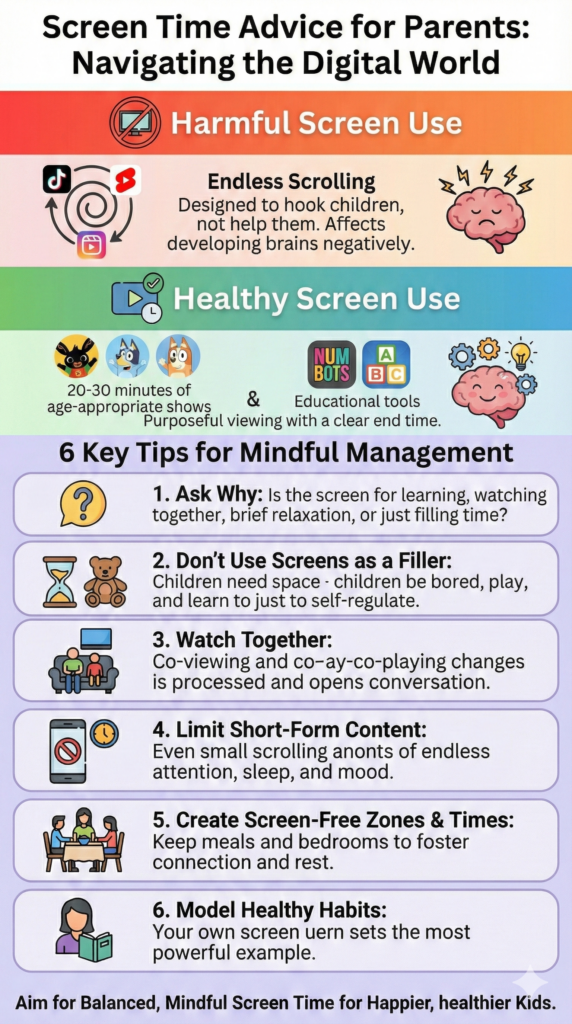
Understanding different types of screen use:
- Endless scrolling on TikTok, YouTube Shorts, or similar platforms is not healthy for developing brains. These are designed to keep children hooked, not to help them learn or relax.
- Purposeful screen use is different. Watching 20 to 30 minutes of a calm, age appropriate programme like Bing or Bluey, or using learning tools such as NumBots, is unlikely to harm a child. Find positive screen time here
- Ask what the screen is being used for. Is it to learn, to watch together, to relax briefly, or to distract and occupy without limits.
- Avoid screens as a constant filler for boredom, emotions, or meltdowns. Children need space to be bored, to play, and to self regulate.
- Co-view and co-play where possible. Sitting with your child changes how content is processed and opens up conversation.
- Set clear boundaries around short form content. Even small amounts, used regularly, can affect attention, sleep, and mood.
The Bigger Picture
There is a wider point we need to be honest about. A blanket ban on social media for under-16s may not be a long-term solution and, as many child safety organisations warn, it could push children into less visible and less regulated spaces.
However, unless tech companies and Ofcom genuinely step up on enforcement, design changes, and accountability, delaying children’s access to social media may be necessary. The Online Safety Act exists but needs stronger enforcement, with real fines and consequences for tech companies that fail to protect children.
Bottom line: Parents and teachers need to work together to set boundaries around screen time and create safe digital environments for children while we push for better protections and regulations.