
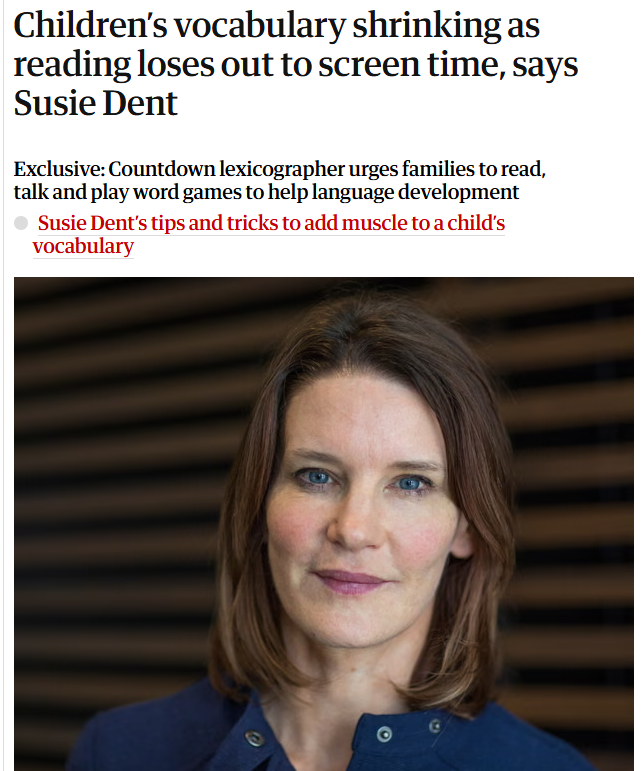
Susie Dent recently warned that children’s vocabulary is shrinking as reading loses out to screen time.
Screens absolutely have a place. But they do not replace books or real conversation.
Shows like CoComelon are designed to keep young children visually engaged. Fast cuts and repetition hold attention, but they do not build deep language. Even educational favourites such as Ms. Rachel and Blippi are still one way communication. Children build vocabulary best through interaction.
What Actually Builds Vocabulary?
Children grow language through:
- Back and forth conversation
- Being read to daily
- Hearing new words in context
- Asking questions
- Retelling stories
Language develops through relationship, not autoplay.
Practical Ways to Strengthen Vocabulary
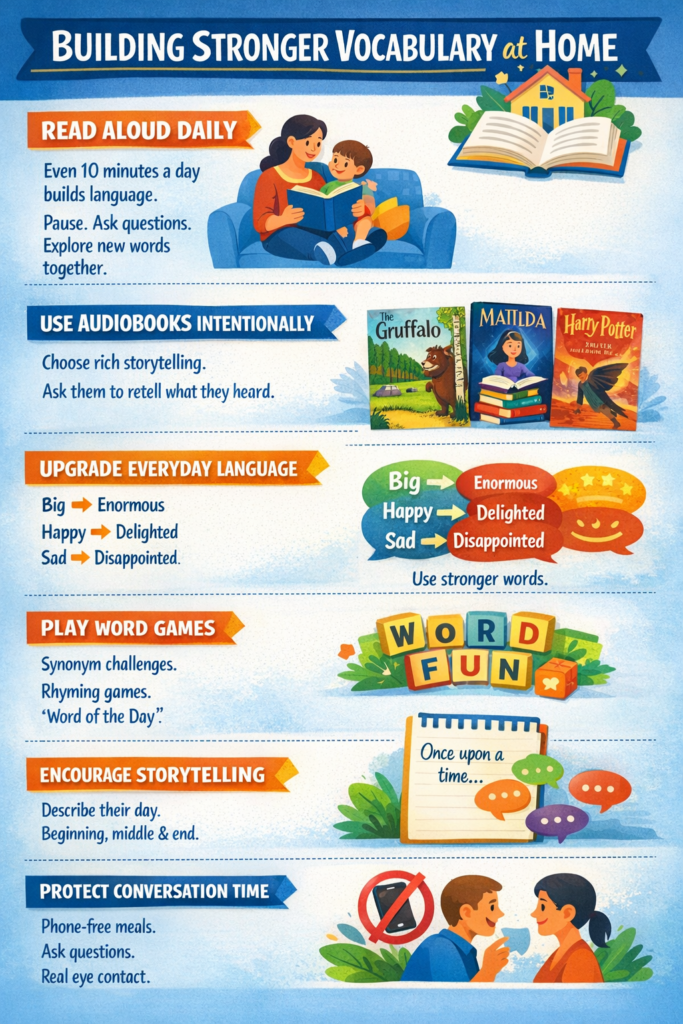
Read aloud every day
Even 10 minutes makes a difference. Pause and ask what a word means or what might happen next.
Use audiobooks intentionally
Titles like The Gruffalo, Matilda or Harry Potter and the Philosopher’s Stone expose children to richer vocabulary. After listening, ask them to summarise the chapter.
Upgrade everyday language
Instead of “big”, try “enormous” or “gigantic”. Instead of “happy”, try “delighted” or “thrilled”. Children absorb the words we use.
Play word games in small moments
Synonym challenges in the car. Rhyming games while walking. A “word of the day” at dinner.
Encourage storytelling
Ask your child to retell their school day as a story with a beginning, middle and end. This strengthens narrative skills and expressive language.
Protect conversation time
Phone free meals. Open ended questions. Eye contact.
Technology can support learning when used intentionally. But books, dialogue and shared stories remain the strongest foundation for confident communication.
Full article : https://www.theguardian.com/society/2026/feb/12/children-vocabulary-shrinking-reading-loses-screen-time-susie-dent?CMP=Share_AndroidApp_Other