
Short answer
Police in Scotland have joined international action against online gangs known as The Com. These groups groom and coerce children, mostly girls, into harming themselves. Police say victims and perpetrators have been identified in Scotland.
For parents, the most useful response is not panic. Know which apps your child uses and who they talk to, learn the warning signs below, and make sure your child knows they can always come to you.
In short
- BBC News reports that Police Scotland detectives are working with the National Crime Agency (NCA) and overseas partners against Com networks. There has been one arrest in Scotland so far, and a handful of convictions in England.
- The Com is short for “the community”: loose online groups, mostly teenage boys and young men, who target vulnerable children, usually girls. Some victims are as young as 11.
- Contact often starts on gaming platforms or social media, then moves to private messaging apps.
- This article explains the pattern without distressing detail. Support routes are listed at the end.
In case you have not watched it, this is our Digital Parenting Rundown for October. It covers other online safety stories parents should know about.
What has Police Scotland announced?
BBC News reported on 29 October 2026 that detectives in Scotland have joined international law enforcement in targeting online gangs which groom and coerce children into acts of self-harm.
Detective Chief Inspector Craig Faulds, who leads work on the groups’ links to Scotland, described the crimes as “an evolution of online child abuse and sexual exploitation”. He said victims and perpetrators have been identified in Scotland, and that police are now mapping the threat to understand its scale.
The Molly Rose Foundation, a suicide prevention charity that supports families affected by these networks, said the groups “represent the gravest risk to children online”. Ofcom, the online safety regulator, called the threat from Com groups “a particular concern” and said it is working with law enforcement and child protection agencies.
What is The Com?
The Com is short for “the community”. It is not one organised gang. The BBC describes loosely affiliated online groups involved in abuse, financial crime and extremism. Groups named in recent court cases include 764 and CVLT, and membership shifts over time.
The NCA says offenders are predominantly teenage boys and young men who share sadistic and misogynistic material, and who often target children their own age or younger. Many offenders were themselves socially isolated, and some were victims first.
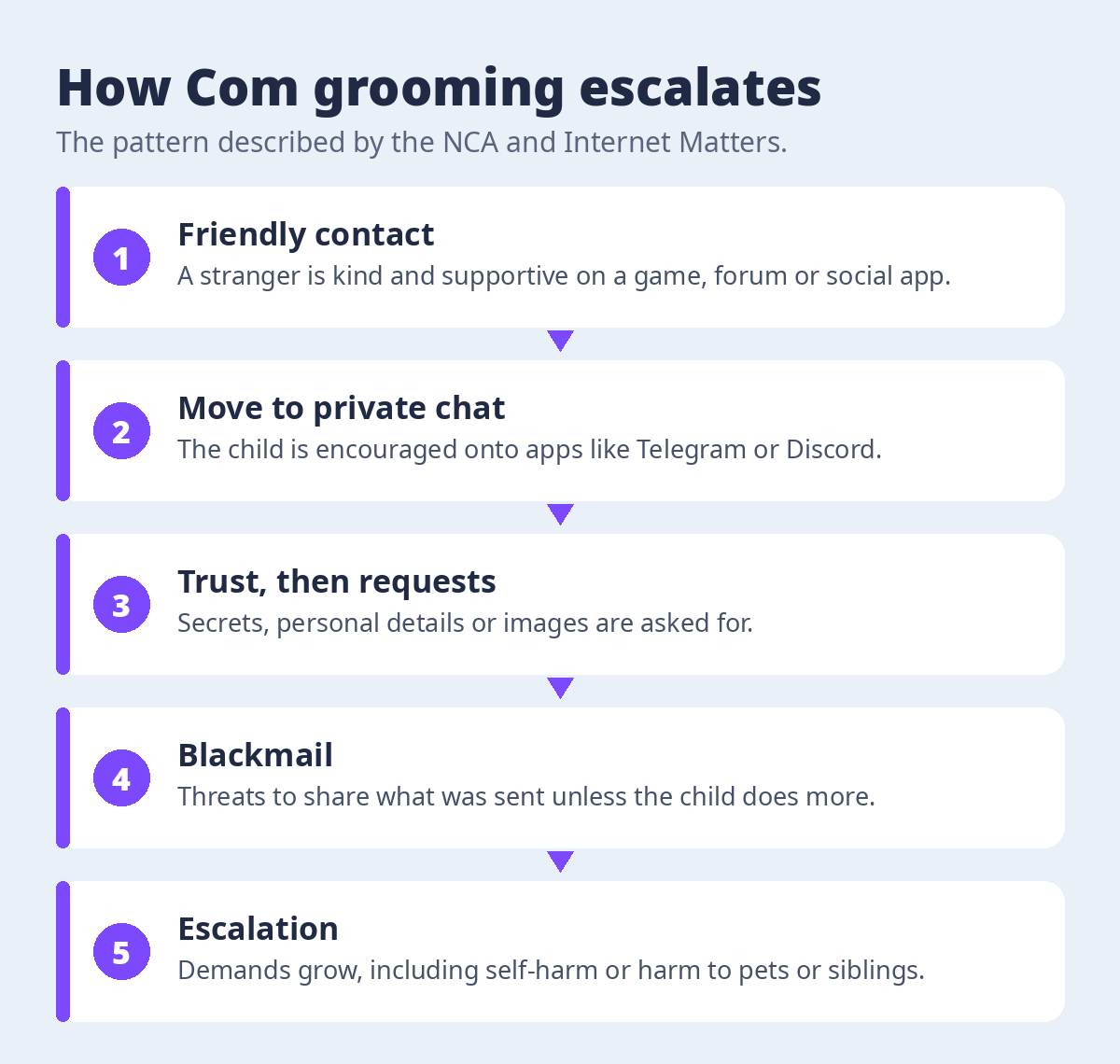
The grooming pattern is deliberate. Hazel Stewart of the NCA’s Threat Leadership team told the BBC that abusers seek out vulnerable young people, including on sites about mental health struggles, and “be very supportive at first”. Demands then escalate, and the victim feels unable to escape. Police say the abuse is often carried out for “kudos”, meaning status with peers, rather than for money.
What do the verified numbers show?
The figures below come from official sources and BBC reporting. Each one measures something different, so they cannot be added together into a single harm rate.
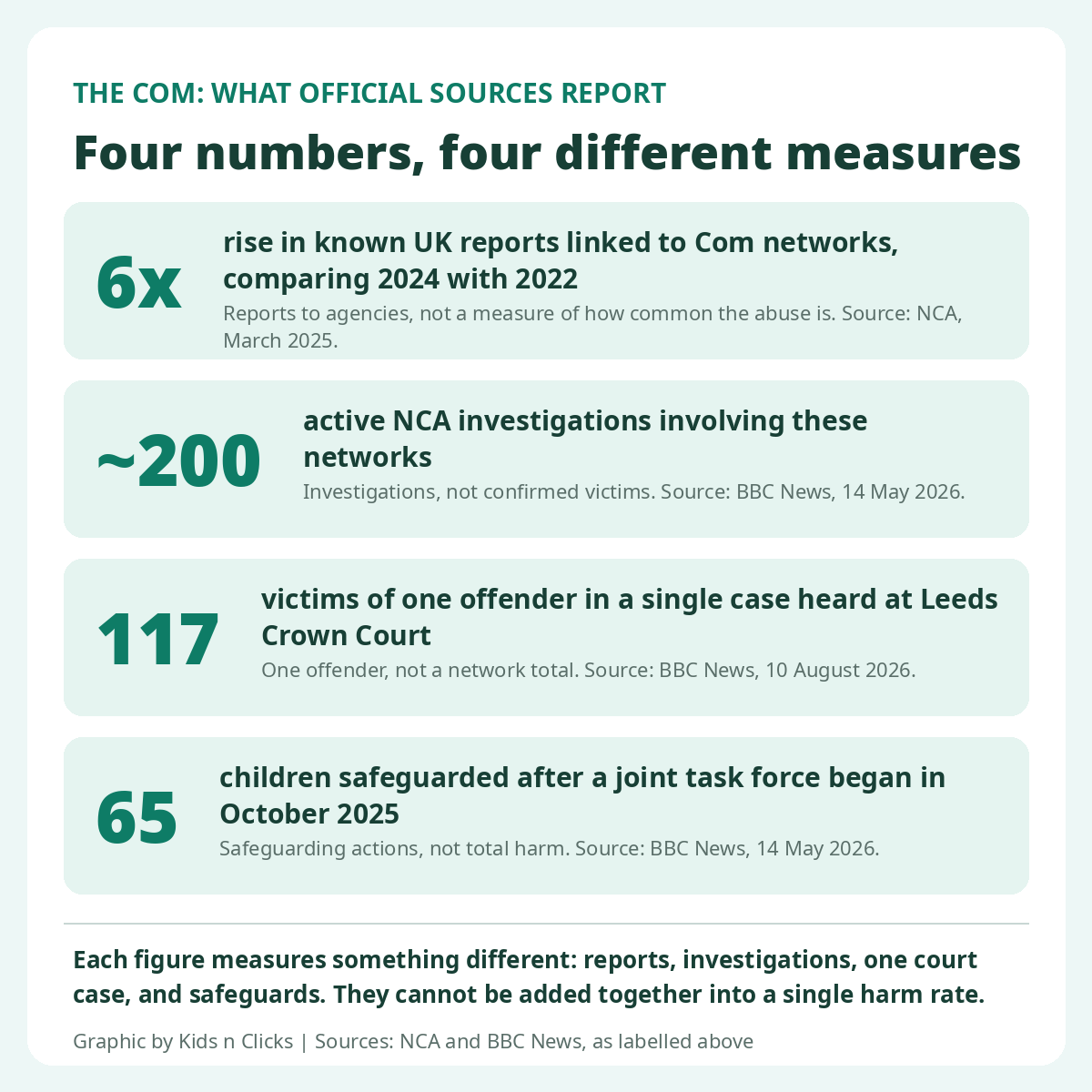
In May, the BBC reported that the NCA was investigating around 200 cases involving these networks, and that 65 children had been safeguarded after a joint task force began work in October 2025.
A case close to home: Leeds
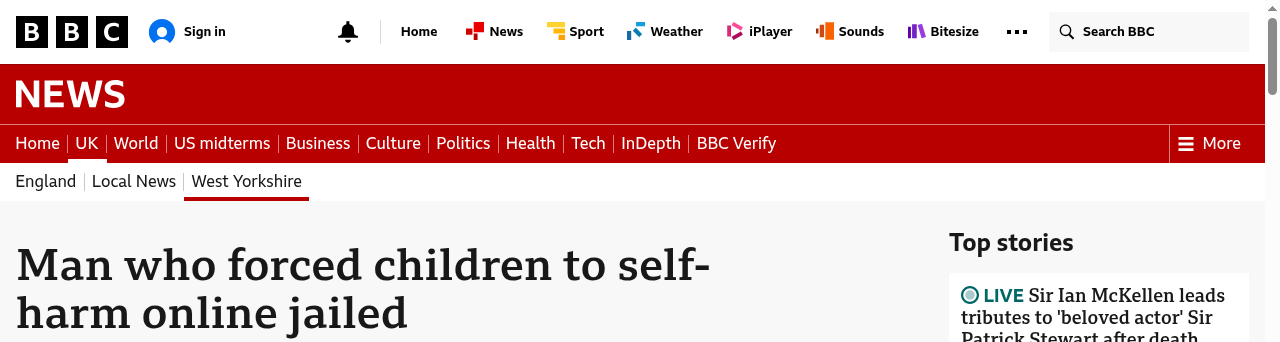
In August, Leeds Crown Court jailed Justin Swaddle, aged 20 and from Meanwood in Leeds, for two years. He admitted blackmail and sexual abuse offences against 117 victims worldwide. All were girls aged 13 to 17, and eight were in the UK. He was 17 at the time of the offending.
The NCA said Swaddle was active on Snapchat, Telegram and Discord. He gained his victims’ trust, then used private information about them to threaten them. The judge described him as “a predatory shark preying on children swimming in the dark waters of the internet”.
The NCA says offenders and victims are often in the same online groups, and that offenders are usually motivated not by money but by the status and notoriety that come from sharing shocking content with other members.
What are the warning signs?
Internet Matters and the Institute for Strategic Dialogue list changes that can suggest a young person is being drawn in. No single sign proves involvement, but trust your instincts and look closer if several appear together:
- New secrecy about their online life, new accounts, or deleted messages
- A sudden move to apps like Telegram, or big changes in how they use Discord
- Obsessive device use, or withdrawing from friends and family
- Changes in eating or sleeping patterns
- Unexplained cuts or marks, especially in patterns, words or symbols
- Long sleeves in hot weather, which can hide self-harm
- Unexplained gifts, digital or physical
- Pets with unexplained injuries, or pets that seem fearful of the child
In this short video, I explain what online grooming looks like and how predators target children.
What can parents do now?
- Start the conversation early and keep it open. The NCA’s Rob Richardson says parents should not be afraid of “being intrusive”. Most parents pay the phone bill, so “you’ve got every right to challenge the way they use it”.
- Sit down together and look at their apps. Ask what each one does, watch for duplicate apps, and ask who they are talking to.
- Agree boundaries together, and review parental controls using the current settings inside each app.
- Talk about grooming techniques before they happen: a stranger who is unusually kind, a request to move to another app, then requests for secrets or images.
- Make it clear that nothing they tell you will get them blamed. The NCA says victims are often too scared or ashamed to come forward, so an open door matters.
If you are worried about a child:
- Report online child sexual abuse or coercion to the CEOP Safety Centre at ceop.police.uk.
- Call the police on 101 for non-urgent advice, or 999 if a child is in immediate danger.
- The NSPCC helpline for adults worried about a child is 0808 800 5000.
- Your child can contact Childline free on 0800 1111 at any time.
- If anyone is struggling with their mental health, Samaritans are free to call, day or night, on 116 123.
Related on this site: Online grooming on TikTok and Snapchat: what parents need to know.
Want help understanding the apps?
In my online safety talks, we look practically at the platforms children use, the ways grooming and coercion happen, and the conversations that protect families.
Get in touch with Kids n Clicks if your organisation would like a talk for parents and carers.
Sources
- BBC News: Scottish police to target online gangs forcing children to self-harm, 29 October 2026
- BBC News: Gangs of teen boys target thousands of girls online, 14 May 2026
- BBC News: Man who forced children to self-harm online jailed, 10 August 2026
- National Crime Agency: Sadistic online harm groups putting people at unprecedented risk, March 2025
- Internet Matters: What is the Com network? Guidance for parents
- Molly Rose Foundation: public warning about online groups targeting children