
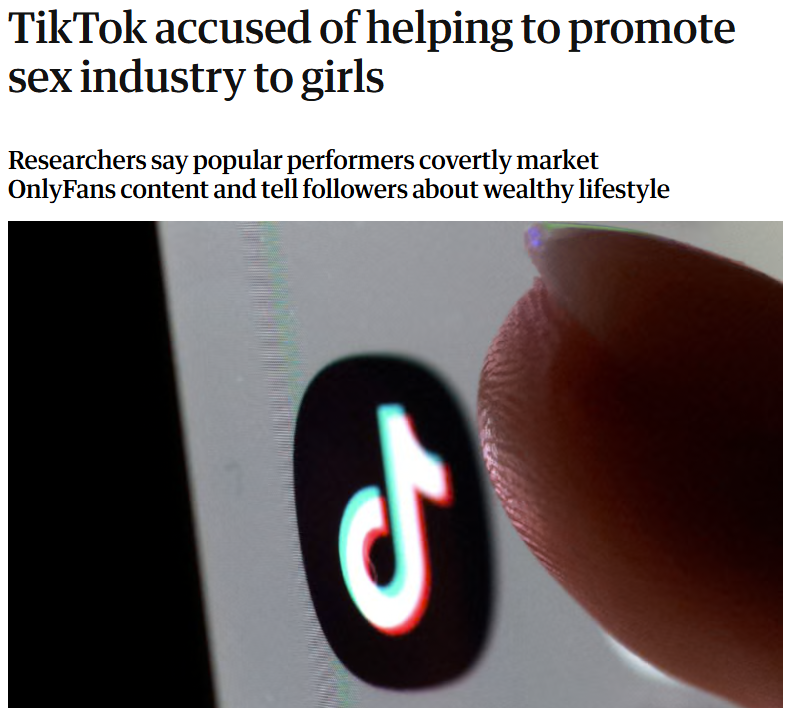
TikTok make-up videos are being used to sell the sex industry to girls, a year-long report has found.
The videos look ordinary: hair, make-up, baking, pets. But researchers say some of OnlyFans’ biggest performers use them to point young followers towards the adult content they sell on another site.
Here is what the report found, and what you can do at home.
Watch the video below on the Sephora trend for kids.
In short:
- Researchers from CEASE in the UK and Collective Shout in Australia spent a year watching everyday TikTok videos from popular OnlyFans performers, and what the app suggested next.
- TikTok bans direct links and mentions of OnlyFans, so the performers hint instead. “Corn” stands in for “porn”.
- The videos sell a dream of easy money. The report estimates the average performer earns about $1,000 a year.
- The researchers say these performers have a huge following among teenage girls. The study did not measure how many girls actually see the videos.
- A few calm questions at home, and later access to the app, go a long way.
What the report found in TikTok make-up videos
The Guardian reported the findings on 7 November. The researchers found coded references to adult content inside what they called “girly lifestyle content”.
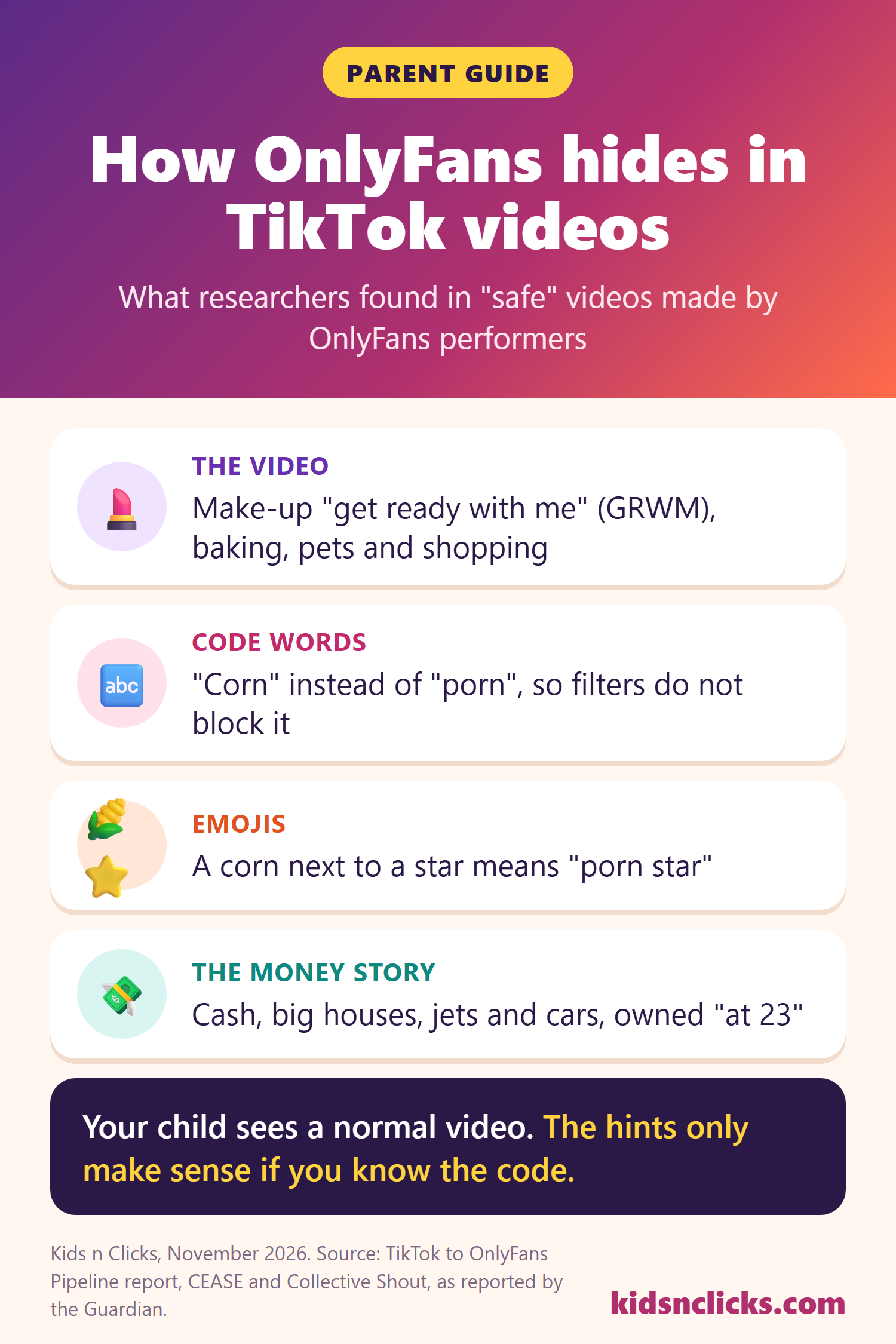
That means make-up tutorials, shopping hauls and “get ready with me” videos (GRWM for short). Nothing in them looks explicit at first glance.
The hints are hidden on purpose. Some performers write “corn” instead of “porn”. A corn emoji next to a star emoji means “porn star”.
Examples from the report, and what they refer to:
| What you might see | What it can mean |
|---|---|
| The word “corn”, or the 🌽 emoji | Used in the posts described by researchers to avoid saying “porn” |
| 🌽⭐, a corn emoji next to a star emoji | Refers to a “porn star” |
| Tags such as “Bop House”, or an invite to “audition” | The Bop House is a house in Miami where a group of women make OnlyFans content together, and it recruits through TikTok |
| Captions about fast money: cash, a house, cars, owned at 23 | The money story the report found across the videos it watched |
Context decides what these mean. A corn emoji in a recipe is just a recipe. The report’s point is that in these videos the hints sit alongside the other signs, all pointing the same way.
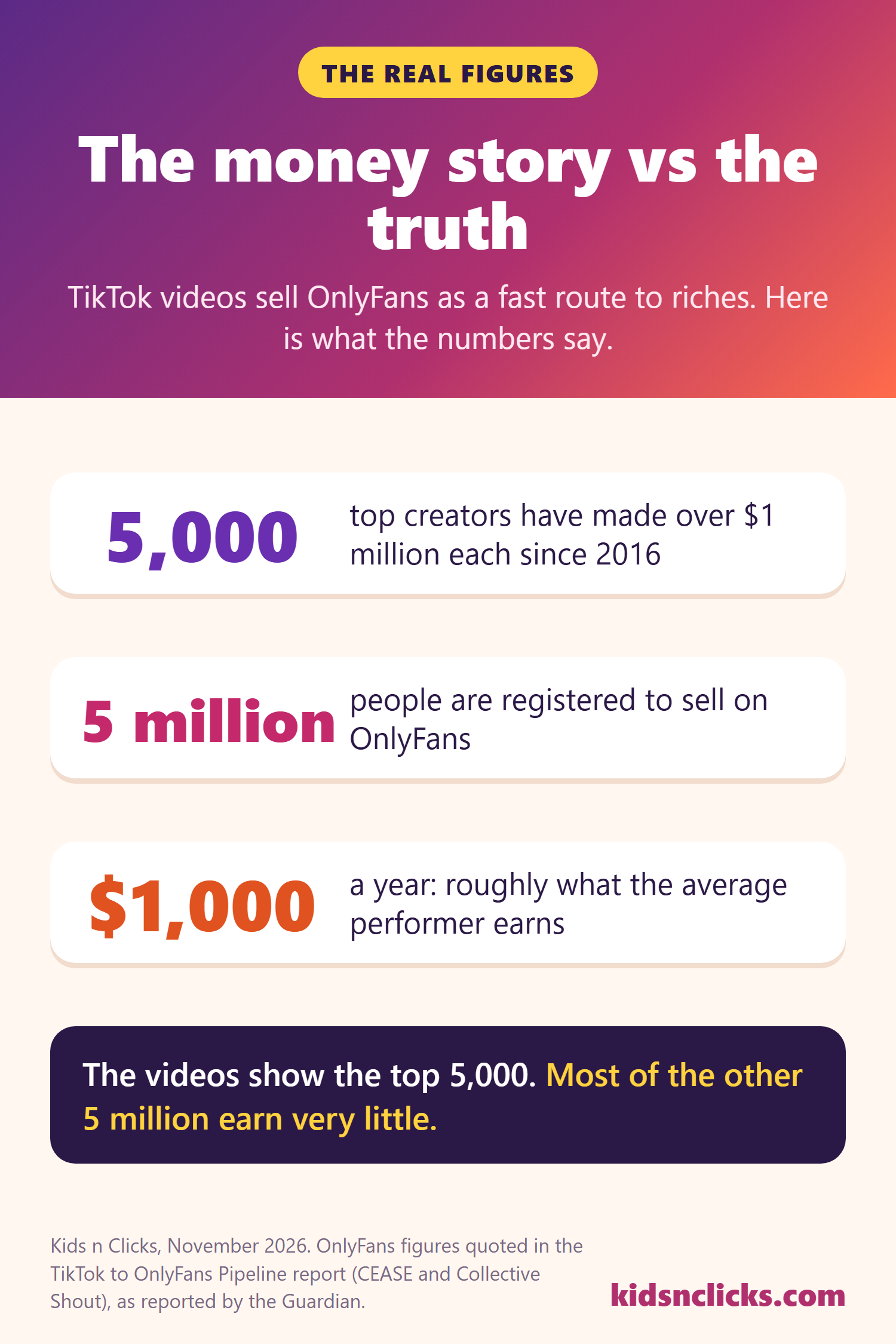
Then there is the money story. The report describes posts showing cash, big houses and cars, with captions about owning it all at 23.
It is worth sharing the real figures with an older child. The report estimates that the average OnlyFans performer earns about $1,000 a year.
Brand deals sit in the same feeds. The Guardian reported that in 2025, L’Oréal made one OnlyFans performer an ambassador for Urban Decay, a make-up brand popular with teenagers.
Both companies responded to the Guardian. TikTok said it strictly prohibits sexual content and that its systems are designed to keep age-inappropriate material away from teens. OnlyFans said its platform is for over 18s, with strict checks at sign-up.
Once a child watches one of these videos, the feed learns from it. Here is a video about algorithms:
Why researchers are concerned
TikTok lets children join at 13. The posts the researchers watched show nothing explicit and never name OnlyFans: they look like ordinary make-up and lifestyle clips.
The researchers say the coded references inside them promote the adult content the performers sell elsewhere. So a 13 year old can watch a make-up video without realising it is also an advert.
The researchers say the biggest OnlyFans performers have huge followings among teenage girls, built on this everyday content.
Their study followed a small number of accounts, so it cannot say how common the pattern is. It does show the route exists.
Why delaying matters
- The report’s authors want the rules tightened. They have called for the ban on showing explicit content to under 18s to also cover posts that promote the sex industry.
- Until the rules change, the feed keeps learning from every watch. Each view of a coded video teaches TikTok to serve more of the same.
- TikTok’s own minimum age is 13. Kids n Clicks suggests waiting until 16, so a child meets videos like these later, and with you already talking about them.
What parents can do
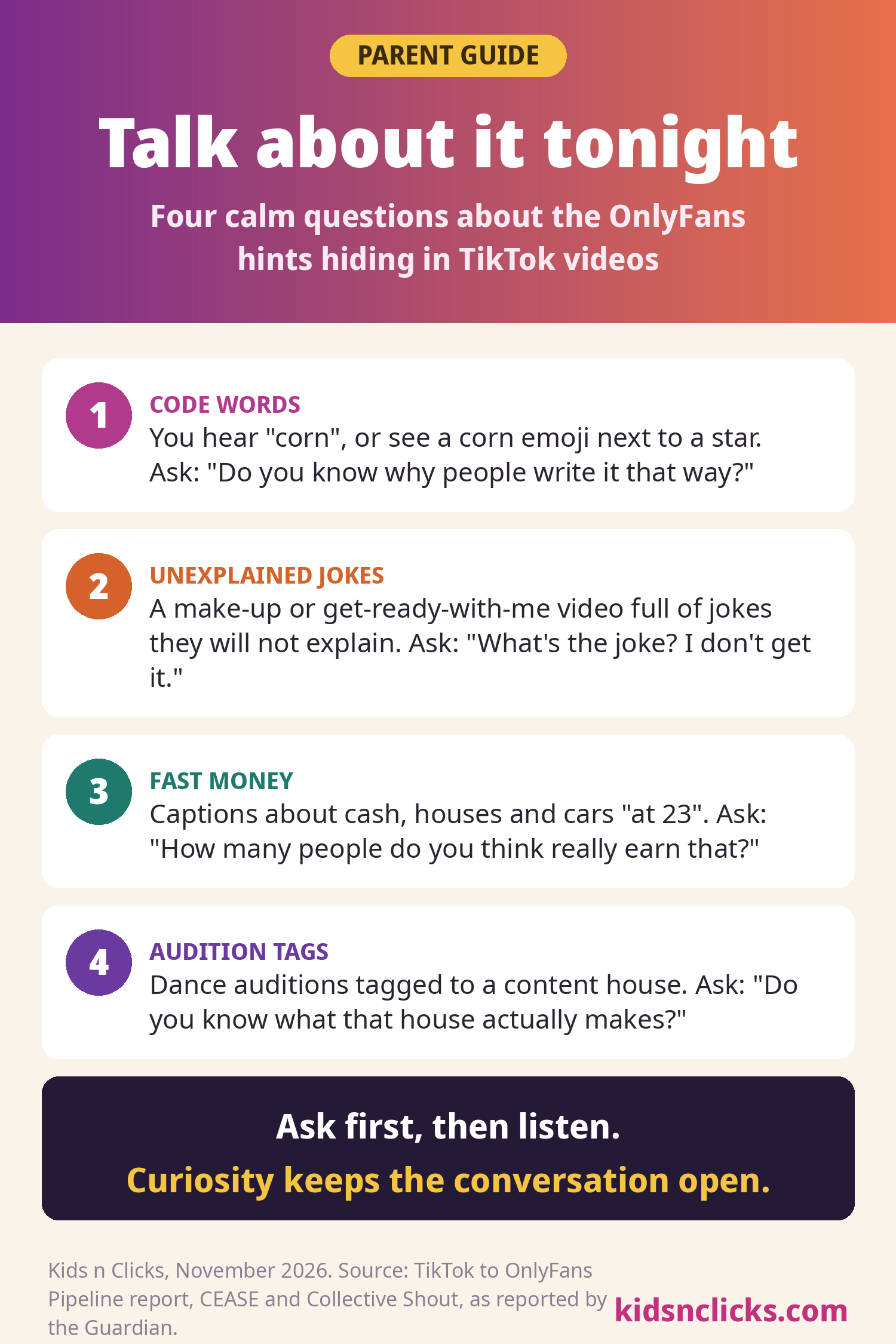
- Start with curiosity, not a ban. Ask which creators your child likes and what they post. The four questions in the graphic above give you an easy way in.
- Talk about the money. The videos present selling sexual content as a business. Ask how many people your child thinks really earn the sums in those captions.
- Watch together now and then. Sitting with your child while they scroll tells you more than any settings page.
- Use TikTok’s own tools. Family Pairing links your account to your child’s and lets you filter keywords such as “corn” out of their feed. Set it up together, and explain why.
- Agree the rules before the app arrives. And keep the door open: if your child sees something odd, you want to be the person they mention it to.