

What’s Happening on the Isle of Man
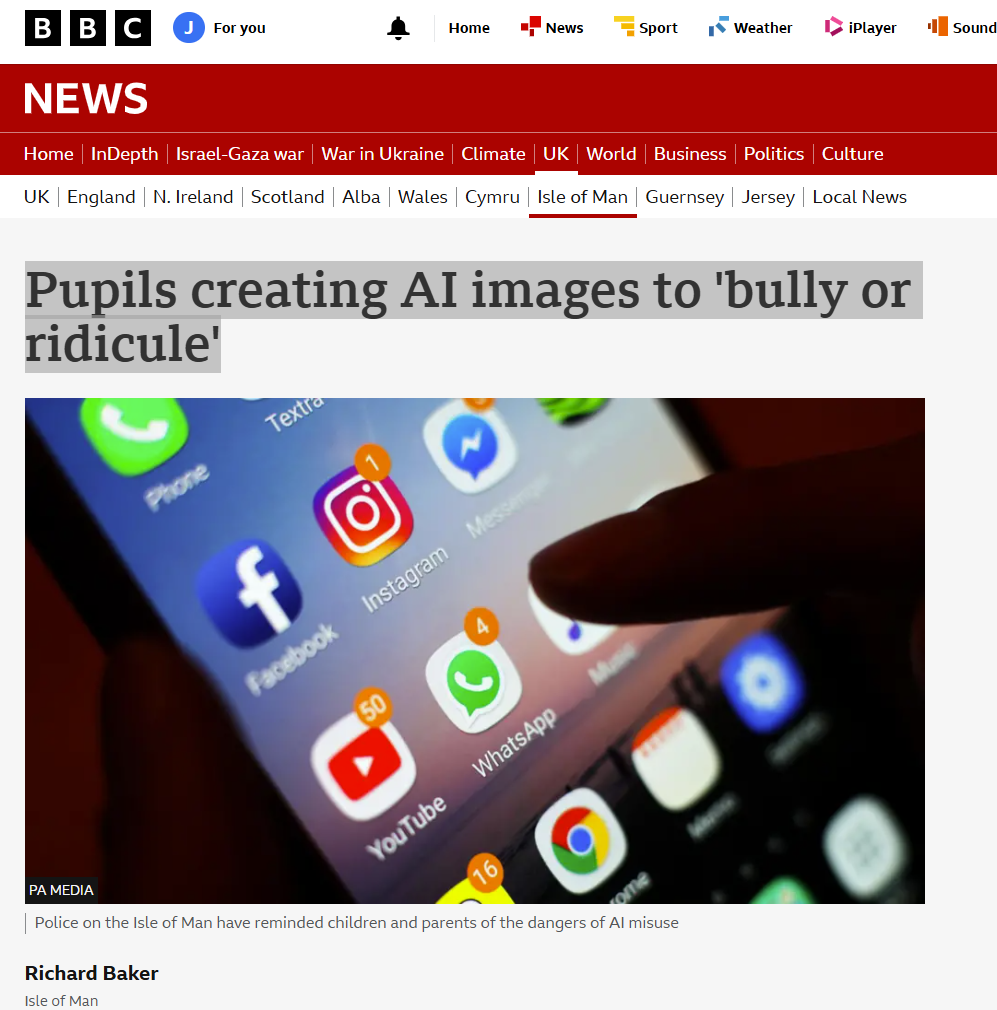
Police on the Isle of Man have reported a sharp rise in children using AI to create fake images of their classmates. PC Louise Kennaugh, the island’s Schools Education Officer, says the number of these cases has gone up quickly.
Children are taking photos of other students and using AI apps to change them. Some are creating fake nude images or making it look like someone did something they never did. These images are being used to bully, embarrass, or get revenge on other children.
The Numbers Tell a Worrying Story
This isn’t just happening on the Isle of Man. Research shows this is a growing problem across the UK:
- 13% of UK teenagers have experienced nude deepfakes in some way (Internet Matters, 2024)
- 11% of secondary school teachers in England say deepfake images or audio have been used to hurt students or staff in their school (ASCL survey, 2025)
What the Law Says
In the UK:
- Creating fake sexual images of children is illegal
- Having a deepfake sexual image of a child is a criminal offence
- However, the AI tools used to make these images are not yet illegal to own
Why This Is So Serious
The harm is real:
- Images spread fast online and can’t be taken back
- Victims feel embarrassed, scared, and deeply hurt
- Mental health problems like anxiety and depression often follow
- Friendships are destroyed and reputations damaged forever
Steps for Parents
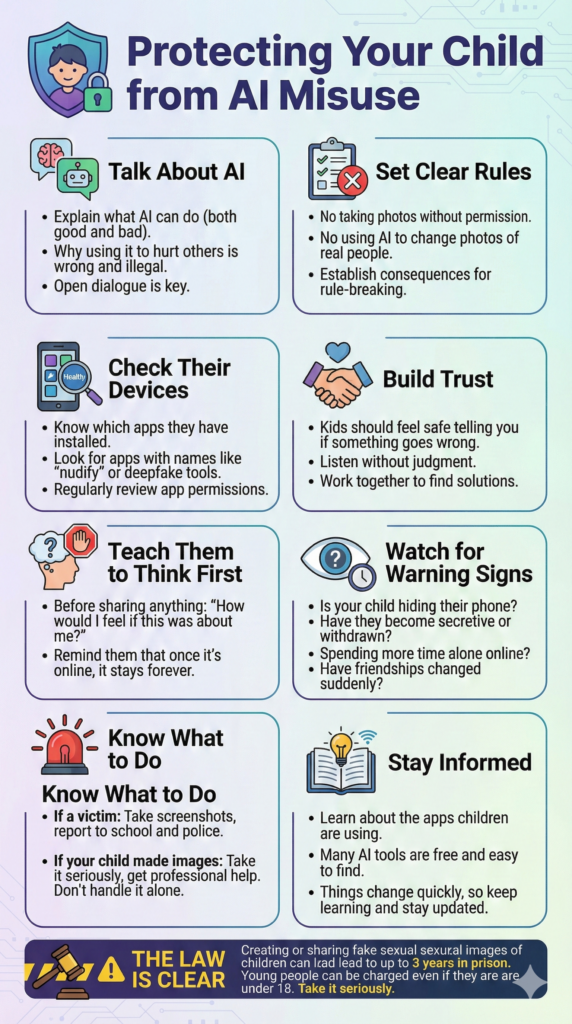
Talk to your child about AI
- Explain what AI can do
- Tell them why using it to hurt others is wrong and illegal
- Share real examples from the news
- Make sure they know this isn’t a joke
Set clear family rules
- No taking photos of people without asking first
- No using AI to change photos of real people
- No sharing images that could hurt someone
- Explain that “I was only joking” is not an excuse
Check their devices regularly
- Know which apps they have on their phone or tablet
- Look for apps with names like “nudify” or AI photo editors
- Ask them to show you what they’re doing online
Be involved but not scary
- Kids should feel safe telling you if something goes wrong
- Don’t be so strict that they hide things from you
- Have regular conversations, not just one big talk
Teach them to think first
- Before they share anything: “How would I feel if this was about me?”
- Remind them: once it’s online, it stays online forever
- Talk about how their actions affect real people
Watch for warning signs
- Is your child hiding their phone when you walk by?
- Have they become secretive or worried?
- Are they spending more time alone online?
- Have their friendships changed suddenly?
Know what to do if it happens
- If your child is a victim: take screenshots, report to school and police
- If your child made the images: take it seriously, get help, make sure they understand the harm
- Don’t try to handle it alone
- Contact the school immediately
Stay informed
- Learn about the apps children are using
- Many AI tools are free and easy to find
- Things change quickly, so keep learning
Steps for Teachers
Teach about AI in class
- Make digital safety a regular topic, not just once a year
- Use simple examples children can understand
- Talk about both the good and bad sides of AI
- The government now requires teaching about deepfakes in secondary schools
Make reporting easy
- Students need a safe way to tell you about problems
- Keep reports private
- Take every report seriously
- Set up an anonymous tip line if possible
Learn about the technology
- Know which AI apps students are using
- Understand how these tools work
- Get training on spotting and handling these issues
- Don’t assume you know everything – this changes fast
Create clear school rules
- Write simple policies about AI use
- Make sure everyone knows the rules
- Send the rules home to parents
- Explain what will happen if rules are broken
Work with parents
- Send information home about AI safety
- Host meetings to explain the risks
- Keep parents updated about what you’re teaching
- Work together, don’t assume parents know what to do
Act fast when problems happen
- Don’t wait or ignore reports
- Save evidence immediately
- You may need to remove reported content within 48 hours
- Call police for serious cases involving sexual images
Support victims properly
- Check on them regularly
- Offer counseling services
- Don’t tell them to keep quiet about what happened
- Make sure they don’t feel isolated or blamed
- Keep them safe at school
Help students spot fake images
- Teach them to question what they see
- Show them how to check if images are real
- Remind them not to share things without checking first
- Build critical thinking skills
Show positive AI uses
- AI isn’t all bad
- Teach how it can help with homework and creativity
- Give examples of good ways to use technology
- Balance the warnings with opportunities
What Both Parents and Teachers Should Know
The basics haven’t changed:
- Treat others with respect
- Think before you act
- Be kind online and offline
- Consent matters
Work together:
- Parents and teachers need to share information
- Children need the same message at home and school
- Don’t assume the other is handling it
- Communication is key
Prevention works better than punishment:
- Talk about this before problems happen
- Build understanding, not just fear
- Help kids make good choices from the start
- Education is the best protection
One photo is all it takes:
- Any photo posted online can be used to create a deepfake
- Think carefully before posting photos
- Privacy settings matter
- Once it’s shared, you can’t control what happens to it
Most victims are girls:
- This is a form of abuse that mainly affects females
- Boys need to understand the harm this causes
- Everyone needs to stand up against this
The Bottom Line.
The Isle of Man is seeing this problem grow fast. So are schools across the UK and around the world. Children are creating fake images of their classmates, sometimes not knowing they’re breaking the law.
Once an image is shared online, it’s there forever. It can spread in minutes and be saved by hundreds of people. There’s no taking it back.
We need to help young people understand this before they make a mistake that will follow them forever. Talk to your children. Teach your students. Be alert. Be involved.
Together, we can help kids use technology safely and kindly.