
Short answer
Meta and Snap are facing another US trial over alleged harm to young social media users. Lawyers say the apps encouraged compulsive use. The companies dispute the claims, and this new case has not been decided.
For parents, this is a reason to look beyond screen-time minutes. Learn how the apps work, delay access where possible, and keep talking about the features that bring children back.
In short
- The case concerns alleged harm from social media use, not a new ban on the apps.
- Jury selection was expected on 28 October. Opening statements are due on 4 November if there are no further settlements.
- Meta denies the claims. Snap says the allegations misrepresent its design and the young people’s experiences.
- Delaying access and teaching children about app design can go together.
In case you haven’t watched it, this is our Digital Parenting Rundown for October. It covers other online safety stories parents should know about.
What is the Meta and Snap trial about?
According to AFP, two young people say their use of social media became compulsive and harmed their health. Their lawyers plan to argue that the apps were “addictive and problematic”. These are allegations being tested in court.
Meta, which owns Facebook and Instagram, denies the claims. Snap, which owns Snapchat, says the allegations misrepresent the young people’s experiences and how its platform was designed.
The case is in Los Angeles. AFP reported that jury selection was expected on 28 October, with opening statements due on 4 November if no further settlements are reached. Mark Zuckerberg, Adam Mosseri and Evan Spiegel are expected to testify from mid-November. Those are the reported plans, not completed events.
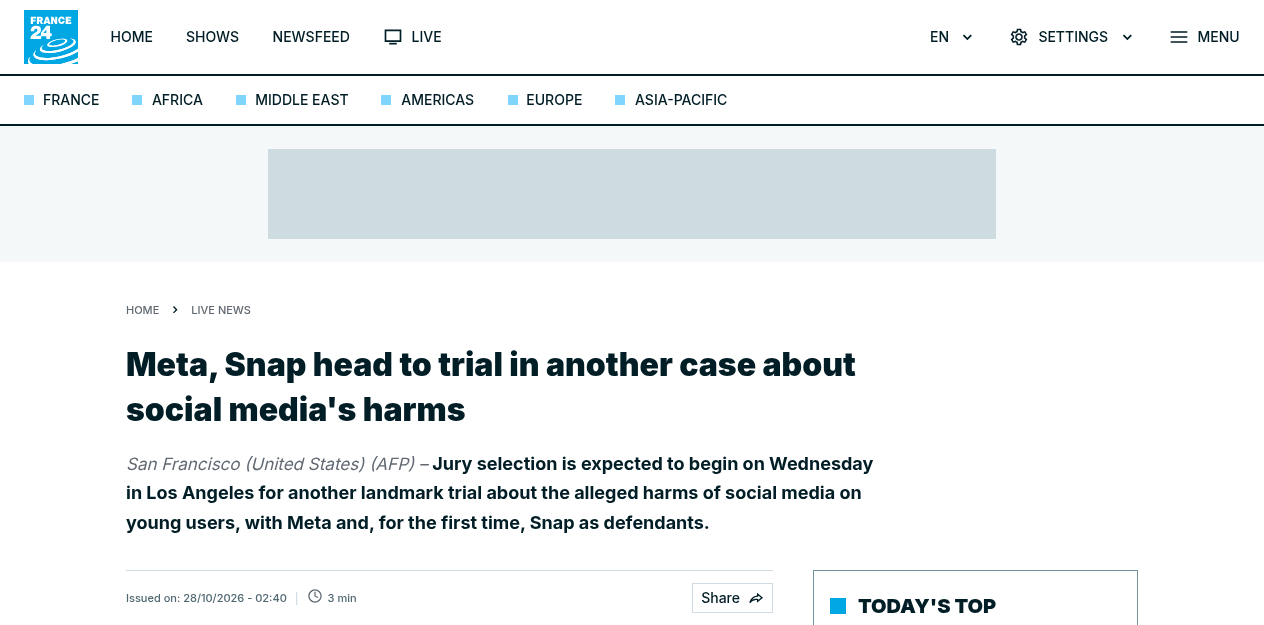
Screenshot: AFP / France24, 28 October 2026. Headline and introductory text, not the news agency’s photograph.
What harms are UK children experiencing online?
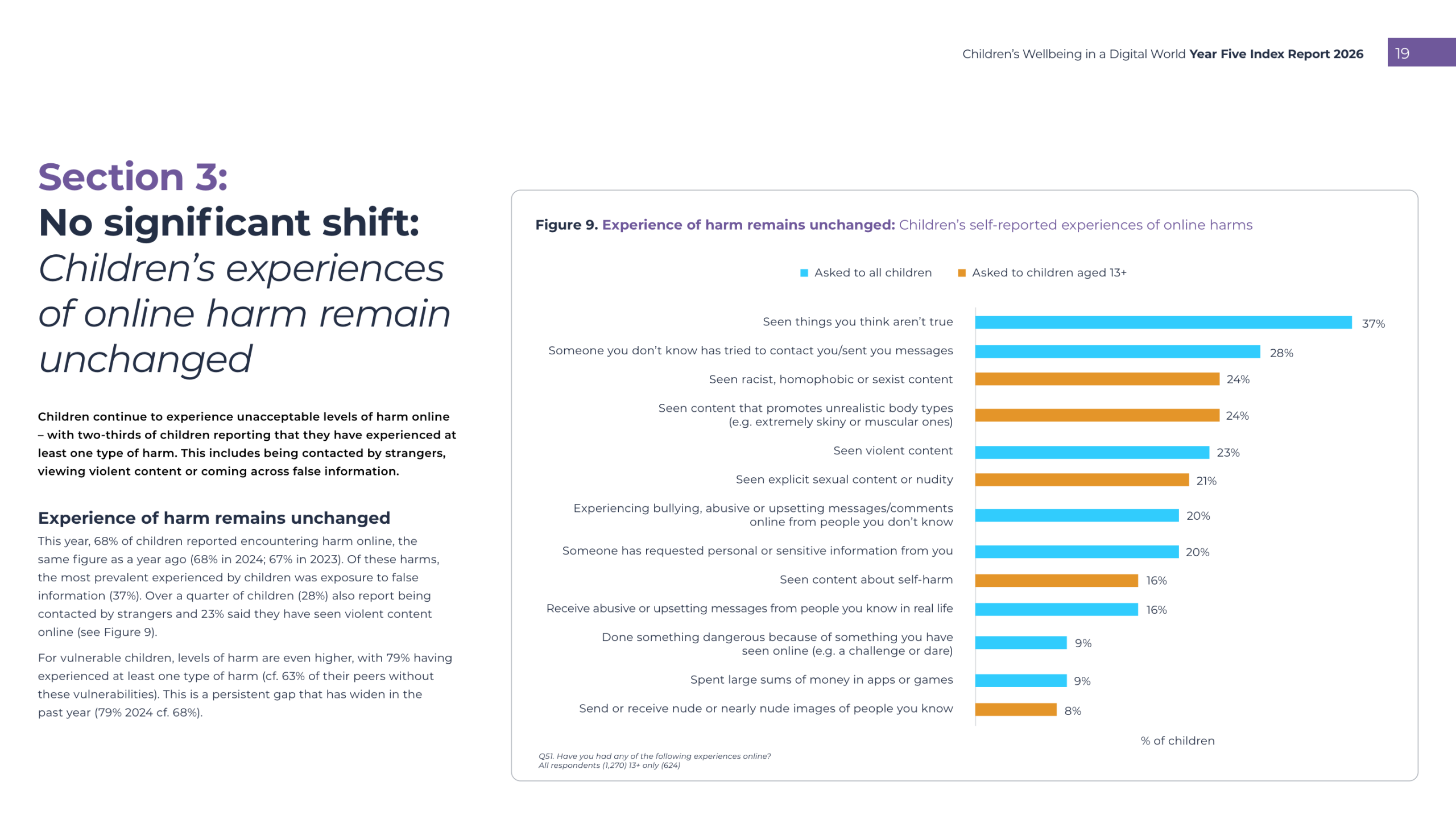
Internet Matters’ 2026 report gives a UK picture of children’s online experiences. It surveyed 1,270 children aged 9 to 16, and their parents, between 15 September and 1 October 2025.
68% reported encountering at least one type of online harm. 23% said they had seen violent content, and 20% reported bullying, abusive or upsetting messages or comments from people they did not know.
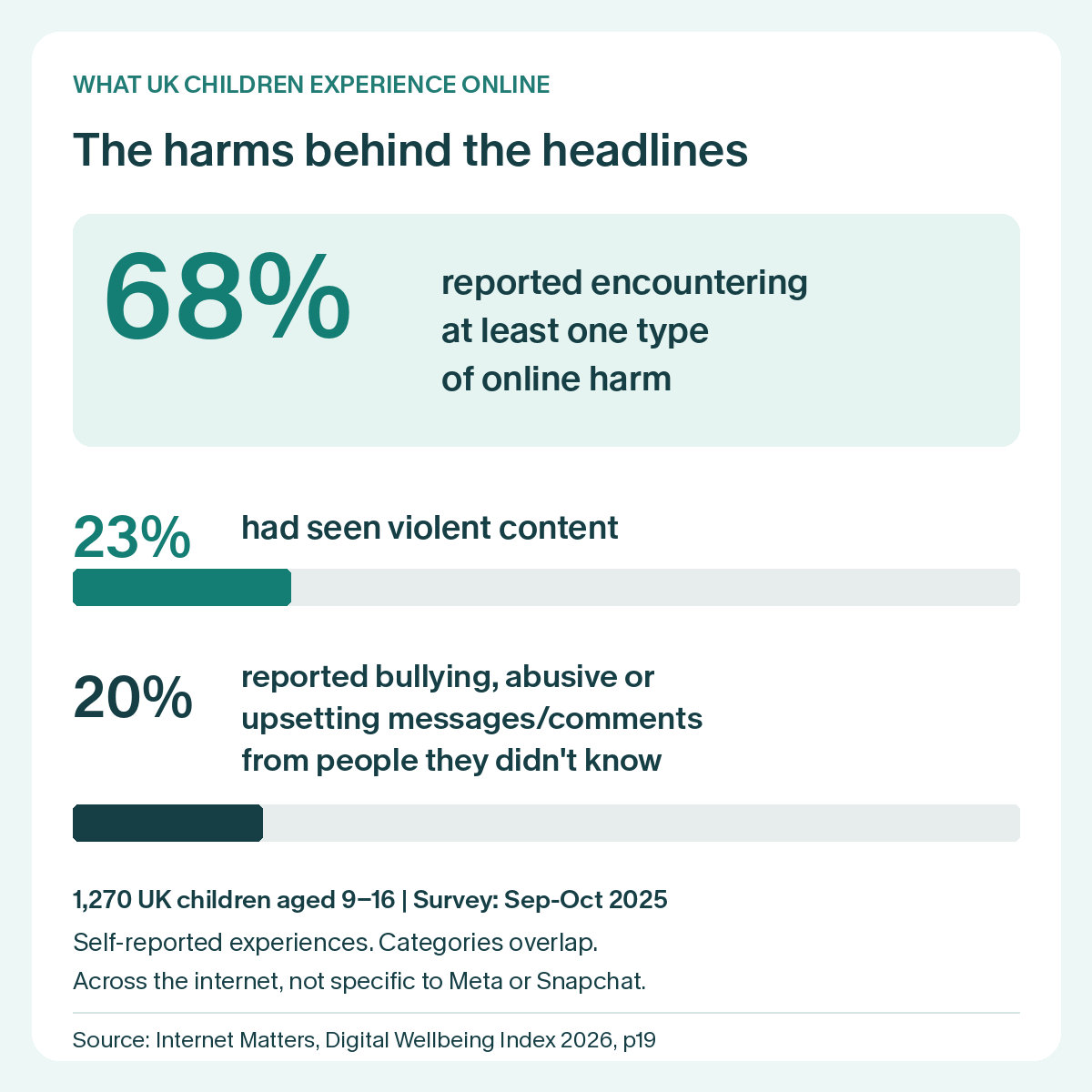
These are self-reported experiences across the internet. The categories overlap, so the figures should not be added together. They are not harm totals attributed to Meta or Snapchat, and they do not establish the claims in this trial.
Why does app design matter?
It is easy to tell a child to put the phone down. It is more useful to understand what makes them want to pick it up again.
Take Snapchat streaks. Snapchat says friends need to send photo or video Snaps back and forth every day to keep a streak going. An hourglass appears when it is about to expire. That turns a conversation into something a child may feel they have to maintain.
A daily-use feature is not, by itself, proof of addiction or proof of the claims in this case. But it gives parents something specific to discuss. Are you sending a Snap because you want to talk, or because you do not want to lose the streak?
In this short video, I explain Snapchat streaks and why parents should understand them.
What other risks should parents understand?
Compulsive use is one concern. Privacy and contact are separate ones. Snap Map can share someone’s location with the friends they choose. Snapchat says location sharing is off by default. Before switching it on, talk about who should be able to see that information and why.
Do not treat every feature as the same risk. A location-sharing setting needs a privacy conversation. A daily streak needs a conversation about pressure to return. Neither should be described as a court finding in this new case.
On Instagram, understand what a teen account is intended to do and check the current settings together. A protection label should be the start of a conversation, not the end of one.
My Instagram teen-account explainer gives parents more context on this Meta platform. It is not a video about the new trial.
Another Snapchat risk: sharing AI-altered images
A separate story from Canada shows why conversations about Snapchat need to cover what children create and share, not only how long they spend on the app.
CBC News reported on 28 October 2026 that 10 pupils at Horizon high school in Lévis, Quebec, were suspended after AI-altered images of teachers and school staff were posted on Snapchat. The school service centre said other pupils reported the images because they felt uncomfortable. CBC reported three-day suspensions and no criminal charges.
This is an independent Canadian school incident, not part of the Meta and Snap court case. It does not show how common this behaviour is, or establish that Snapchat caused it. The risk for families to discuss is using AI to alter someone’s image and then sharing it with others without their consent.

For parents, a useful question is: what would you do if a friend sent an edited picture of a teacher or another pupil? Talk about consent, the harm an image can cause, and why forwarding it can spread that harm. Encourage children not to pass it on and to tell a trusted adult or the school if an image makes them uncomfortable. In this case, other pupils speaking up helped staff find out.
Why do we recommend delaying access?
My view is that addiction sits at the centre of the problem with these apps. Keeping people coming back makes money for the companies. Parents should not have to rely on a child’s self-control to counter that.
That is why delaying access matters. But education matters just as much. A child can learn about algorithms, online pressure and boundaries before they have an account.
If your child already uses these apps, start with a conversation. Ask what they enjoy, what feels difficult to leave, and whether they ever feel they have to reply. Keep the focus on understanding the app and agreeing what happens next.
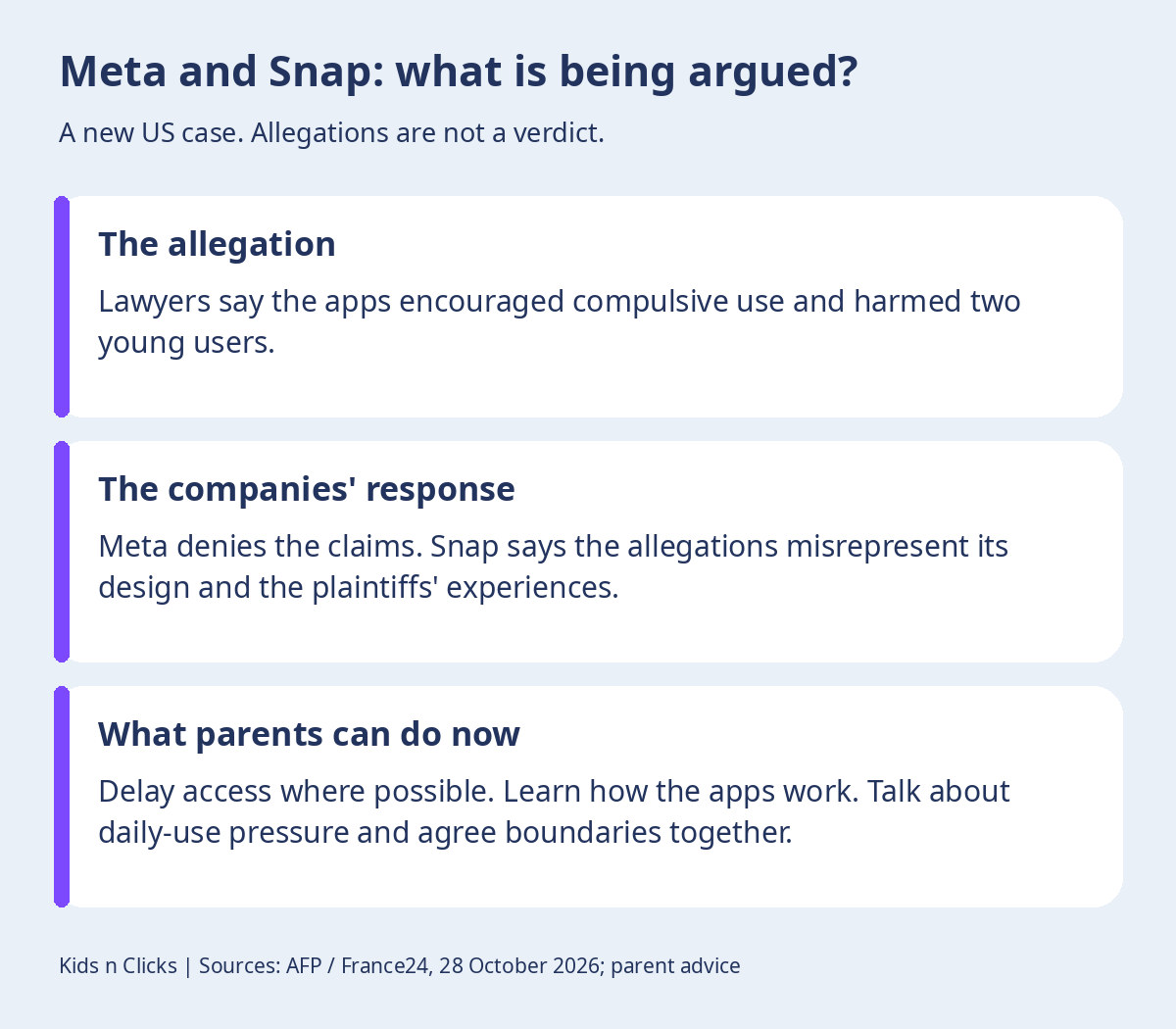
Diagram by Kids n Clicks. Case summary: AFP / France24, 28 October 2026. Parent advice is separate from the allegations.
What can parents do now?
- Try the apps yourself before agreeing to access. Explore the features, not only the home screen.
- Talk about streaks, notifications and the feeling of having to check back. Ask which features make leaving hardest.
- Agree boundaries together, including times when the phone is away and what to do if friends expect an instant reply.
- Review who can contact your child and any location sharing. Check the current settings in the app rather than relying on an old screenshot.
- Make it clear your child can ask for help if something feels wrong. Keep the education going, whether access starts now or later.
Want help understanding the apps?
In my online safety talks, we take a practical look at platforms including Meta’s apps, Snapchat and TikTok. We go beyond worrying headlines to the features children actually use and the conversations parents can have at home.
Get in touch with Kids n Clicks if your organisation would like a talk for parents and carers.
Sources
CBC News: Lévis pupils suspended over AI-altered images of staff, 28 October 2026Internet Matters: Children’s Wellbeing in a Digital World, 2026 report, pages 8 and 19
AFP / France24: Meta and Snap head to trial