
Your child is lying on the sofa quietly scrolling. You glance over. It is just Pinterest. Pretty pictures. Recipes. Clothes. You go back to what you were doing.
What Is Pinterest?

Pinterest is an app where people save and share images. Think of it like a digital scrapbook.
You search for something you like, save the picture and collect it on a board. Recipes. Fashion. Home ideas. Travel. Fitness.
It looks beautiful. It looks harmless.
But Pinterest has 500 million users worldwide. A third of them are between 17 and 25. And many users are much younger than that.
Parents worry about TikTok. Parents worry about Instagram. Pinterest feels safe so nobody checks it.
The Story That Changed Everything
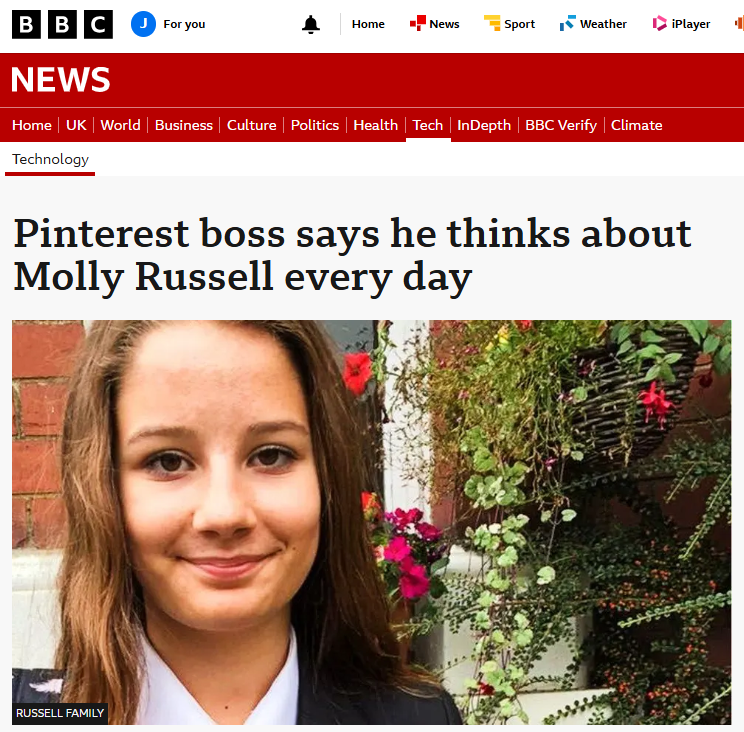
In 2017, a 13-year-old girl called Molly Russell took her own life.
Her family later found out she had been looking at hundreds of images about self-harm and suicide on Pinterest and Instagram. Nobody in her family knew.
Her father Ian Russell spent years speaking to governments and media around the world. He demanded that technology companies be held responsible for what children see on their platforms. His work helped change online safety laws in the United Kingdom.
After Molly, Pinterest banned images related to self-harm and suicide. It was a step forward.
But the problem did not stop there.
Why Banning Images Is Not Enough
When a platform bans a word or a hashtag, users simply create a new one. This happens faster than any platform can keep up with.
Here is how it works:
- Pinterest bans a harmful hashtag like #thinspiration which was used to find content about extreme thinness and eating disorders.
- Users immediately create a new code word like #secretsociety123 to share the same harmful content.
- By the time Pinterest finds the new word and bans it, another one has already appeared.
It is a never ending cycle. Harmful content keeps finding its way to young users even when platforms are trying to stop it.
The Age Limit Problem
Pinterest asks for a date of birth when you sign up. But nobody checks if it is true.
A 10-year-old can open Pinterest, type in a false date of birth and be inside the app within minutes. There is no check. There is no barrier.
Parents often assume age limits mean something. In most cases right now they do not.
What Pinterest’s CEO Said This Week
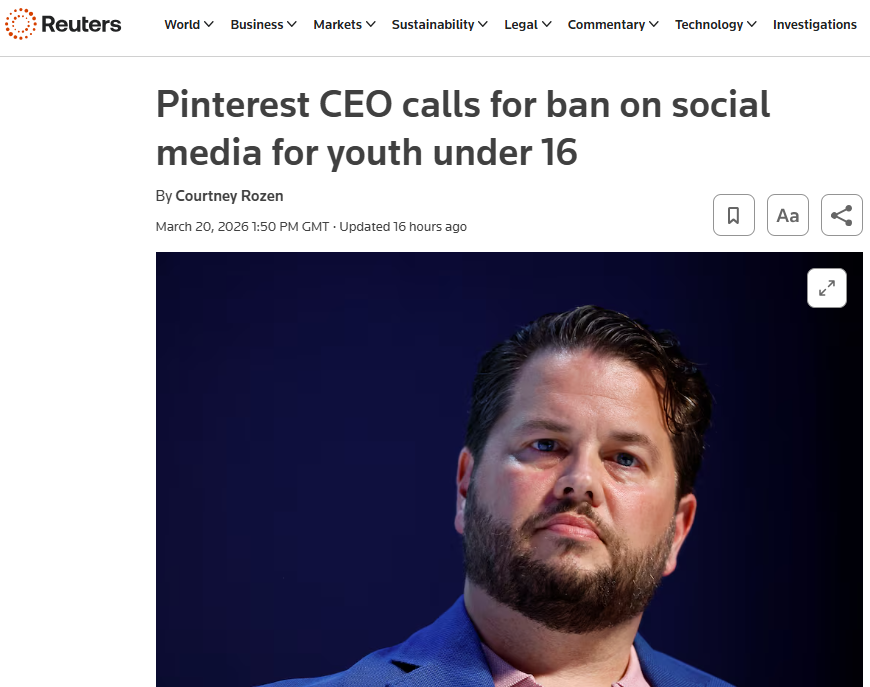
This week the CEO of Pinterest called on world governments to ban social media for children under 16. He pointed to Australia as a country that already has this law.
It is significant that a technology company leader is saying this publicly. But while governments debate and courts decide, children are online right now.
Three Things Every Parent and Teacher Should Know
- Pinterest looks like the safest platform your child uses. It does not have the reputation of TikTok or Instagram. Most parents never think to check it. That is exactly what makes it worth paying attention to.
- Banning harmful content does not make it disappear. Users create new code words and hashtags faster than any platform can remove them. The filters simply cannot keep up.
- Age limits do not work without real verification. A child can sign up in minutes using a false date of birth. There is nothing stopping them.
What Parents Can Do
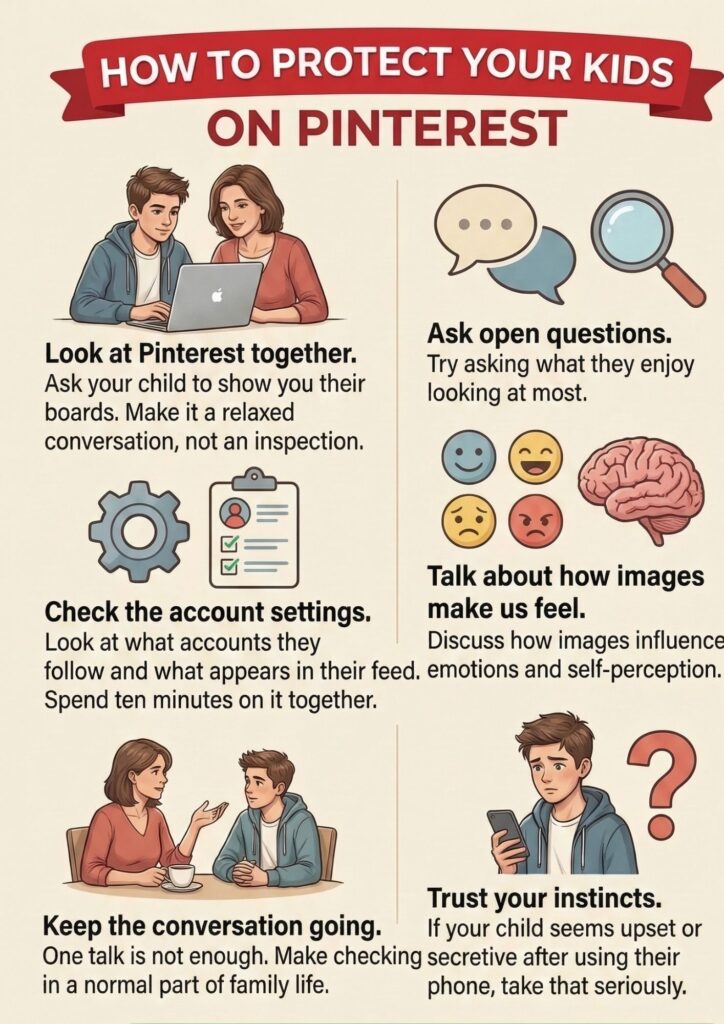
You do not need to be a technology expert. You just need to be curious and consistent.
- Look at Pinterest together. Ask your child to show you their boards. Make it a relaxed conversation, not an inspection.
- Ask open questions. Try asking what they enjoy looking at most. Ask if they have ever seen anything that made them feel uncomfortable or sad.
- Check the account settings. Look at what accounts they follow and what appears in their feed. Spend ten minutes on it together.
- Talk about how images make us feel. Pinterest is full of images of perfect bodies and perfect lives. Help your child understand that most of these images are carefully chosen and often edited.
- Keep the conversation going. One talk is not enough. Make checking in a normal part of family life.
- Trust your instincts. If your child seems upset or secretive after using their phone, take that seriously. You know your child best.
What Teachers Can Do
.
- Add Pinterest to your online safety lessons. Most programmes focus on TikTok and Instagram. Pinterest is rarely mentioned. Adding it fills an important gap. Contact us at parven@kidsnclicks.com if you need help with this
- Teach children how feeds work. Help students understand that the more they engage with certain content, the more of it they will be shown. This matters especially with content about body image and weight.
- Create space for children to talk. Not every child feels safe talking at home. Being a trusted adult who understands these platforms can make a real difference.
- Share information with parents. Many parents have no idea how Pinterest works. A simple information sheet or a short talk at parents evening can go a long way. Contact us at parven@kidsnclicks.com for this
- Know the warning signs. If a student seems very focused on body image or their mood has changed, take it seriously. It is always worth a gentle conversation.
- Talk openly about technology yourself. Children learn from what they see adults do. Sharing how you use technology and what you choose to avoid sends a powerful message.
The Conversation Is the Starting Point
Molly Russell’s father did not know what his daughter was seeing online. Nobody told him to look.
We cannot go back. But we can make sure more parents and teachers know to look now.
Pinterest is not the villain in this story. But understanding how it works and what children can find on it is the first step to keeping young people safer.
You do not need to panic. You do not need to ban everything. You just need to know. And now you do.