

Some people who used to work at TikTok and Instagram told the BBC some things that parents and teachers need to know. What they said might surprise you.
TikTok was putting politicians first
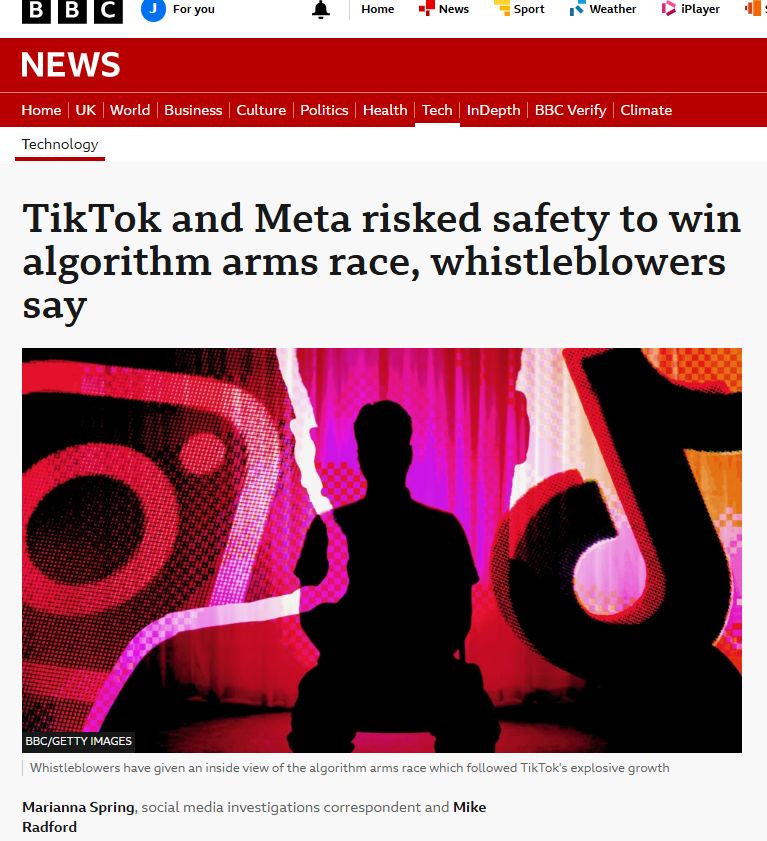
When someone reports something bad on TikTok, staff decide how quickly to deal with it. But the BBC found out that:
- A politician being made fun of online was treated as more urgent than a 16-year-old girl whose private photos were being shared without her permission.
- A 17-year-old being bullied online was also treated as less important than political cases.
Staff who wanted to fix this were told not to. The reason was to keep governments happy, not to keep children safe.
Instagram wasn’t safe when it launched
When Instagram Reels came out in 2020, a researcher who worked there said it wasn’t ready. Here’s what they found inside the company:
- There was a lot more bullying and harassment on Reels than on the rest of Instagram. About 75% more.
- There was more hate speech too, about 19% more.
The company hired 700 people to help Reels grow. But when the safety team asked for just two more people to help keep children safe, they were told no.
What is borderline content?
This is content that is harmful but not illegal. It includes misogynistic posts, racist material, sexualised content, and conspiracy theories. The platforms often allow it because it gets more clicks, more comments, and more time on screen.
Internal documents from Meta showed the company was aware its algorithm amplified content that made people angry.
One document noted that outrage drives engagement, and the algorithm then shows users more of whatever keeps them watching.
The people who built these apps knew this was happening. They chose to keep doing it anyway.
What can parents do
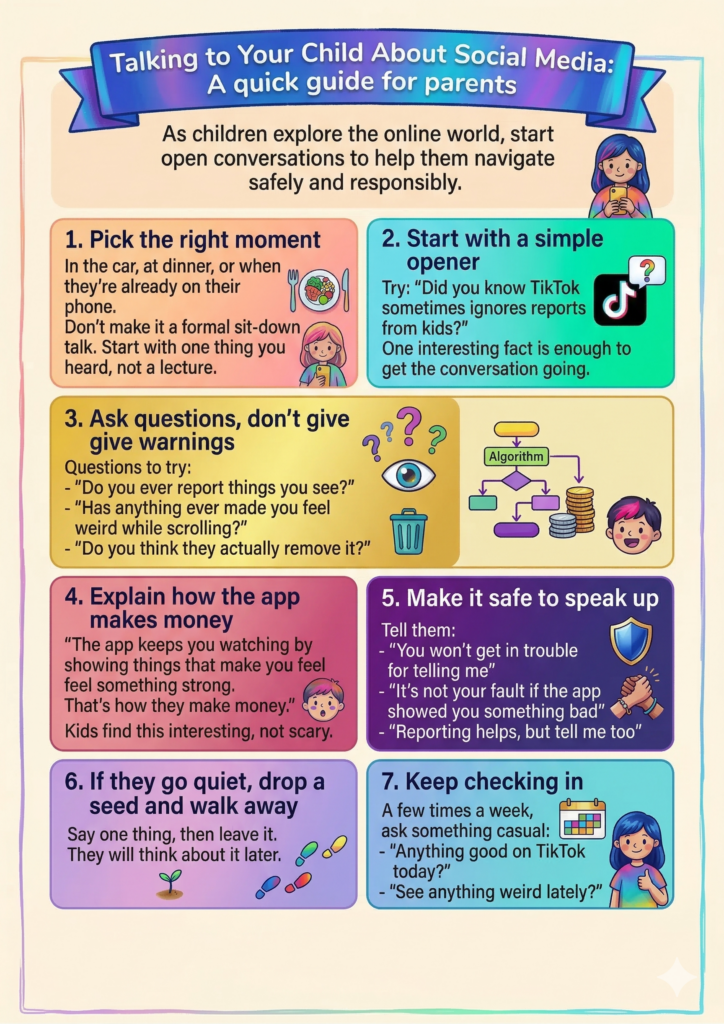
Starting the Conversation With Your Child About Social Media
A lot of parents know they should talk to their kids about social media. The hard part is actually starting. Here are some practical ways to do it without it turning into a lecture or an argument.
Don’t make it a big serious sit-down talk
If you say “we need to talk about your phone,” most kids will immediately switch off or get defensive. Instead, bring it up naturally. Some good moments:
- In the car, when you’re side by side and not making eye contact. This feels less intense.
- During dinner, as something you heard about rather than a rule you’re setting.
- When they’re already on their phone, just ask what they’re watching.
A simple opener could be: “I read something today about TikTok. Did you know the app sometimes ignores reports from kids?”
That’s it. You don’t need a whole speech ready. Just start with one thing and see where it goes.
Ask questions instead of giving warnings
Kids tune out warnings fast. Questions work better because they make the child think instead of just listening.
Try things like:
- “When you see something weird on TikTok, do you ever report it?”
- “Do you think they actually remove it?”
- “Has anything ever made you feel a bit weird when you were scrolling?”
You’re not interrogating them. You’re just being curious. If they give short answers at first, that’s fine. The door is open now, and they’ll come back to it.
Explain how the app actually works, simply
Most kids think the app just shows them stuff they like. They don’t know there’s a system behind it designed to keep them watching as long as possible.
You can explain it like this:
“The app makes money when you watch it. The longer you watch, the more money they make. So they show you things that make you feel something strong, like angry or shocked or sad, because that keeps you watching. They’re not trying to make you feel bad on purpose. They’re just trying to make money.”
Most kids find this genuinely interesting. It’s not scary, it’s just the truth. And once they know it, they start noticing it themselves.
Talk about what to do if they see something upsetting
This is the most important part. Many children see horrible things online and say nothing because they’re embarrassed or think they’ll get in trouble.
Tell them clearly:
- “If you see something that upsets you, you won’t get in trouble for telling me.”
- “You can report it in the app, but now we know it doesn’t always get dealt with quickly. So tell me too.”
- “It’s not your fault if the app showed you something bad.”
That last one matters more than people realise. Children often feel ashamed when they see something upsetting, like they did something wrong. Make sure they know they didn’t.
What if they get defensive or don’t want to talk?
This happens a lot, especially with older kids. If they roll their eyes or say “I know, Mum,” don’t push it.
Just say something like: “I’m not trying to take your phone away. I just want you to know what’s actually going on. You’re old enough to understand it.”
That last sentence is important. Framing it as treating them like someone who can handle real information usually works better than framing it as a safety warning. Nobody wants to be talked to like a small child.
If they really don’t want to engage, just leave a small seed. Say one interesting thing and drop it. They will think about it later, even if they don’t show it.
Keep checking in, not just once
This isn’t a one-time conversation. Social media changes fast, and so does how children use it.
A simple habit that works for a lot of families is asking one casual question a few times a week:
- “Anything good on TikTok today?”
- “See anything weird lately?”
- “Anyone being annoying online?”
These small check-ins mean children get used to talking to you about it. So when something serious happens, it doesn’t feel like a big deal to bring up.
The goal isn’t to scare your child or make them distrust everything they see. It’s just to make sure they’re not navigating it completely alone. Most children are more switched on than we think. They just need someone to be honest with them about what’s actually going on.
A Note for Safeguarding Leads and Teachers
If you’re thinking about where to start, a short assembly or classroom session on how algorithms work or how content creators make money is one of the most effective first steps. Children who understand the business model behind these apps think about them completely differently.
It doesn’t need to be a full curriculum overhaul. Even a single 20-minute session can shift how a child sees their feed.
If you’d like a ready-made assembly pack, a classroom session, or just want to talk through what would work best for your school, get in touch. We can build something that fits your students and your setting.