
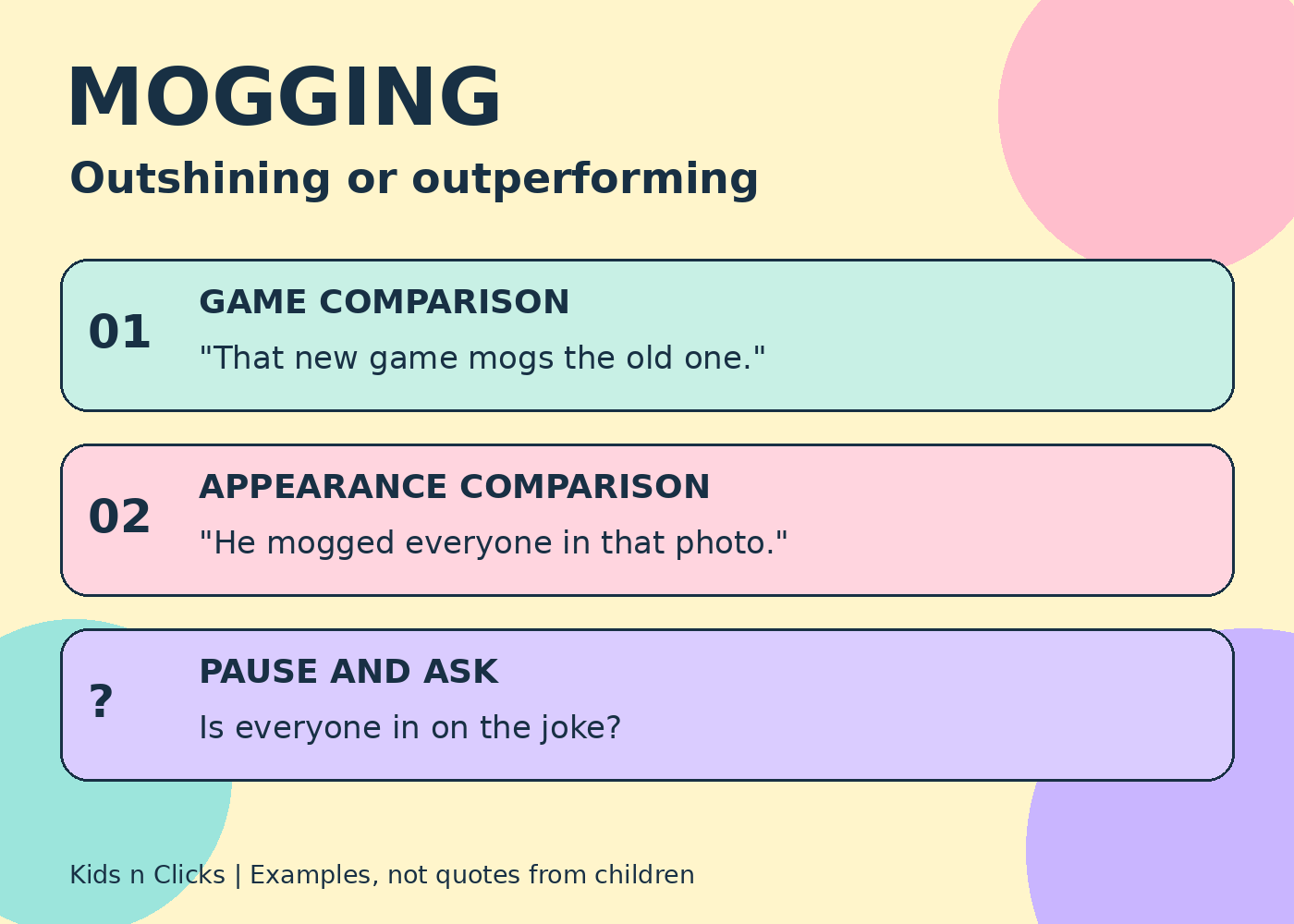
Mogging means outshining or outperforming someone or something. If your child says someone has been “mogged”, they mean that person has been upstaged. It can be a joke about a game, a compliment about an outfit, or a put-down about someone’s appearance.
Collins named mogging its 2026 Word of the Year on 3 November. For parents, the useful question is not simply whether the word is bad. It is what your child means by it, and who is on the receiving end.
What does mogging mean in a chat?
- “That game mogs the old one.” The new game is being described as better.
- “She mogged everyone in that outfit.” This could be admiration for someone’s style.
- “You got mogged in that photo.” This could be a joke, but it could also be someone trying to make another person feel inferior.
These are illustrative examples, not quotes from children. The same word can do different jobs. Ask about the conversation rather than assuming every use means the same thing.
Where did the word come from?
Collins says the word is believed to come from AMOG, short for “alpha male of the group”. Its history includes bodybuilding culture and the manosphere, a loose collection of online spaces centred on men and masculinity, including misogynistic communities.
That history matters, but it does not tell you what every child means today. The BBC’s reporting on the word’s changing use describes it moving into playful, ironic and celebrity-related language too.
Watch a short mogging explainer
The Independent’s journalists explore what mogging means and why the term has drawn attention.
How is mogging linked to looksmaxxing?
Looksmaxxing means trying to maximise physical attractiveness. Mogging appears in those conversations because it turns appearance into a comparison: who looks better, taller or more impressive?
Hearing the word is not proof that a child follows an extreme community. Look at the content around it. Are they laughing about a game, or are people ranking classmates’ faces and bodies? Are photos being shared to embarrass someone?
What should parents and teachers say?
Start with curiosity. “What does mogging mean in that video?” is a better opening than treating a slang word as evidence that something is wrong.
Then ask, “Who is the joke about?” and “How did they take it?” Explain that calling something banter does not make it acceptable to humiliate someone.
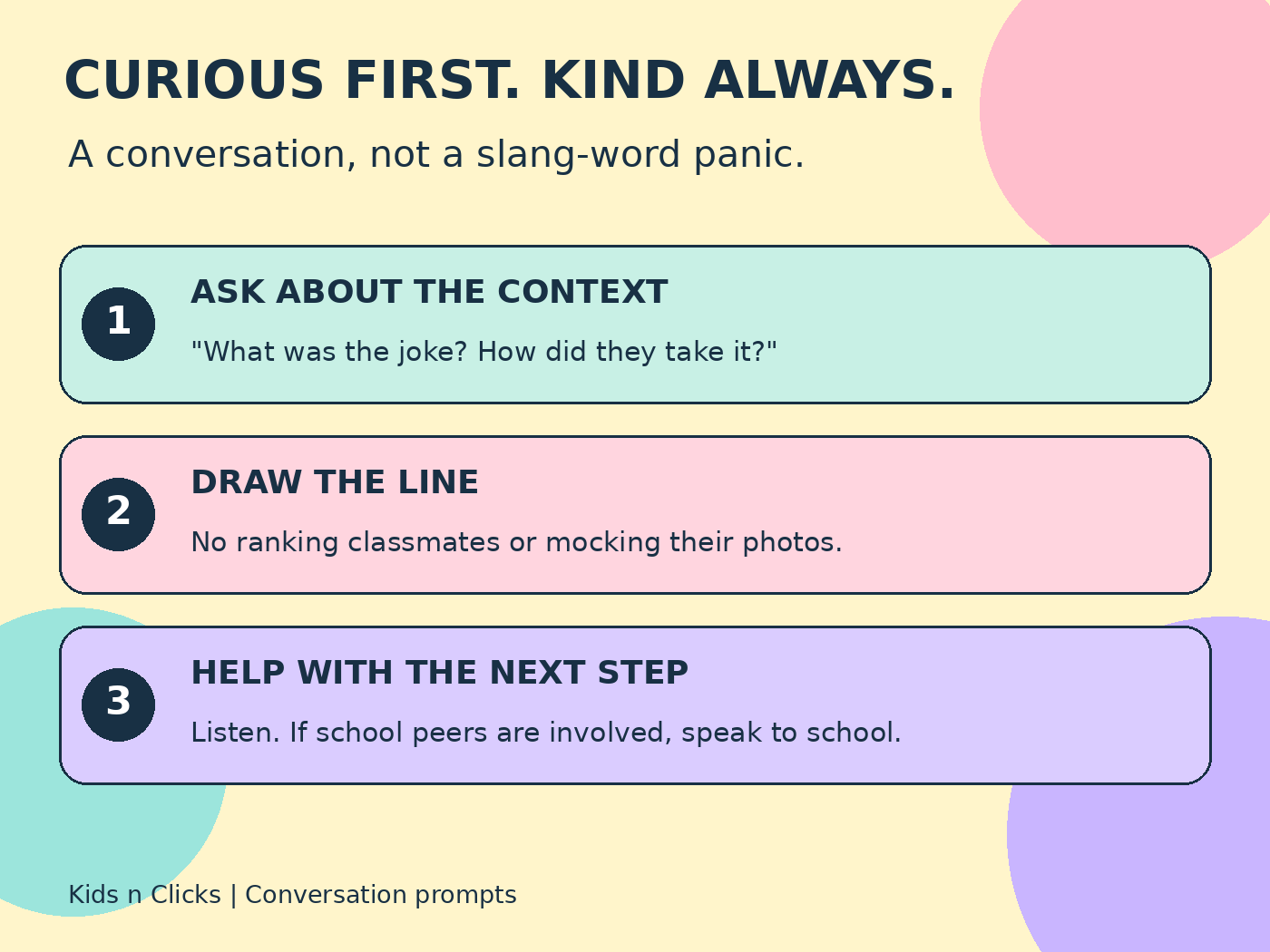
Set a clear boundary against rating classmates’ looks or posting photos to mock them. In school, discuss fictional examples rather than inviting pupils to compare real people in the room.
If a child is being targeted, listen calmly and reassure them that it is not their fault. If school peers are involved, speak to their teacher or pastoral team. The NSPCC’s bullying guidance explains how to support a child and work with school.
The word is a starting point for a conversation, not a diagnosis or a reason to panic. Understand the joke, check how people are being treated, and make kindness the boundary.
Sources
- Collins: Word of the Year 2026, 3 November 2026.
- BBC: What mogging means, 3 November 2026.
- BBC: How the term moved into mainstream use, 3 November 2026.
- NSPCC: Dealing with bullying.