
Politicians have been promising to act on children’s social media for years. Now there’s a consultation. It closes 26 May. After that, the Government will look at the results. Then it will decide what to do. Then it will legislate.
Your child is online today.
What the Telegraph is actually reporting
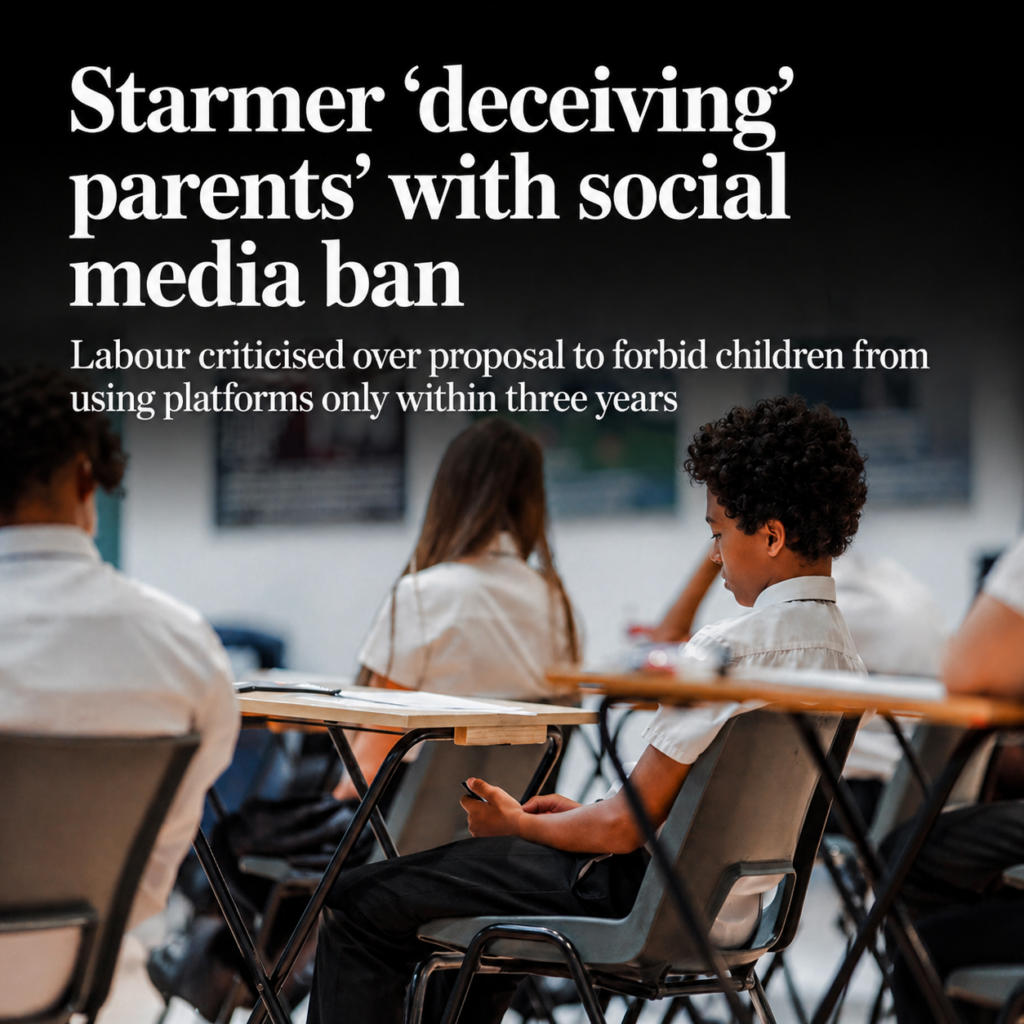
The criticism is simple. Parents were told action was coming. What they got instead was a process. The Telegraph reports that Labour’s approach could mean children are only forbidden from using social media within three years, rather than in the coming months.
The House of Lords backed an amendment to ban social media for under-16s. The Government took the consultation route instead. That consultation, called “Growing Up in an Online World,” is asking about age restrictions, addictive features like autoplay and infinite scrolling, and late-night use restrictions.
All reasonable things to look at. All happening very slowly.
What parents are dealing with right now
Children are already being exposed to algorithm-driven content, beauty trends, looksmaxxing, adult themes, violent content, harmful advice, AI chatbots, anonymous messaging, and pressure from group chats. Looksmaxxing, if you haven’t come across it, is a trend where young people obsess over changing their physical appearance, often driven by comparison culture online.
Some of these risks appear suddenly, spread quickly, and disappear before schools or parents even know what is happening.
No law catches that in real time.
What you can do now
Don’t wait for Westminster. Here’s what actually helps:
- Check which apps your child is on. Not just the obvious ones.
- Turn off autoplay. It’s in the settings on most platforms.
- Remove phones from bedrooms at night. Sleep matters more than you think.
- Don’t give a child under 13 social media. That’s the legal minimum on most platforms, and it exists for a reason.
- If you can hold the line until 16, do it.
Don’t rely only on age ratings. Many children access apps before the stated minimum age. Even when a child is technically old enough, that does not mean the platform is emotionally safe for them.
If you want faster action, tell your MP directly. You can write to them in two minutes using this link: raisetheage.eaction.org.uk/notenough. The more MPs hear from parents in their own constituencies, the harder it is to delay.
The conversation is more important than the settings
The thing that protects children most isn’t parental controls alone. It’s knowing they can tell you when something feels wrong.
Children are more likely to tell you about something worrying if they believe you will stay calm. The aim is not to catch them out. The aim is to help them understand what they are seeing.
That takes time. It takes not reacting badly the first time they tell you something uncomfortable. It’s harder than turning on a filter, and it works better.
The honest version of this story
A ban matters. Delaying access to social media gives children more time to develop before they’re thrown into algorithm-driven spaces designed to keep them hooked. That’s worth fighting for.
But a ban is not a finish line.
Australia introduced one and kids are already getting around it using VPNs and fake accounts. A VPN is a tool that hides what websites someone is visiting. A determined 12-year-old can set one up in under an hour. The technology to stop them reliably doesn’t exist yet.
So even if the law changes, the job doesn’t end there. Children still need adults who are paying attention. They still need schools that talk about this stuff openly, not just in a one-off PSHE lesson, but regularly, as the online world keeps changing. They still need parents who know what platforms they’re on and why.
Push for the ban. Write to your MP. Sign the petitions. And while you’re waiting for the law to catch up, don’t outsource this to anyone else.
The conversations you have at home matter more than any policy announcement.